
Every spring we get the same call: “The deck looks rough — can you come take a look?”Half the time it didn't need to look rough. The owner just waited a year too long, or the last stain was the wrong product, or nobody ever cleaned the wood properly before recoating. Ontario decks die from neglect, not weather. Here's how often you actually need to restain in the GTA, what to use, and the honest signs that your deck is asking for help.
We've been staining decks, fences, and pergolas from Pickering to Oakville for years, and the short version is this: most homeowners wait too long, then over-spend on restoration that proper maintenance would have prevented.
The Honest Answer: It Depends on These 3 Things
Anyone who gives you a single number — “every two years, period” — is wrong. Restain frequency is a function of three variables, and you need to understand all three before you can plan your maintenance.
- The type of stain you used last time. Clear sealers, semi-transparent stains, and solid stains live on completely different timelines. A clear preservative might fail in a single Ontario winter; a quality solid stain can last five years if it was applied right.
- Exposure. A south- or west-facing deck with no tree cover gets hammered by UV. A shaded north-facing deck holds stain twice as long but is more prone to mould and algae. Decks that sit close to the ground or under a downspout deal with constant moisture and rot pressure.
- The prep done last time. This is the one nobody wants to hear. Stain applied over a dirty, unsanded, or poorly cleaned deck will fail in 12 months no matter how premium the product. Prep is 80% of deck life.
A $90 can of premium stain on a badly prepped deck will outlast a $40 can on a properly prepped deck by exactly zero days. The wood doesn't care what you spent.
Realistic Re-Stain Schedule by Stain Type
Here's the schedule we use when we walk a client through what to expect for their deck staining maintenance plan:
- Clear sealer / wood preservative: Every 1–2 years. Clear products have no UV pigment, which is what protects the wood from greying. They're the shortest-lived option and we rarely recommend them outside of specialty hardwood applications.
- Semi-transparent stain (the most popular choice): Every 2–3 years on horizontal surfaces, 3–4 on vertical. This is what most GTA decks have on them. You still see the wood grain, you get real UV protection, and it doesn't peel — it weathers gracefully.
- Semi-solid or solid stain: Every 3–5 years. More pigment means more UV blocking, which means longer life — but you lose the natural wood look. Solid stain is closer to paint than to traditional stain.
- Penetrating oil stains: 1–3 years. They soak into the wood rather than forming a film. Easier to maintain (no peeling — just re-coat) but shorter intervals.
- Film-forming stains: Can last longer between coats, but when they fail, they peel. That means full sanding or stripping next time, which costs more than just topping up an oil stain.
What Ontario Weather Does to Your Deck
The GTA is a brutal environment for exterior wood. We don't have it as bad as the East Coast, but we're no California either. Here's what your deck is fighting:
- Freeze-thaw cycling: Water gets into checked grain, freezes, expands, and pries the boards apart from the inside. We can get 40+ freeze-thaw cycles in a single winter.
- UV degradation: Even our shorter summer breaks down lignin (the natural glue in wood). Unprotected wood turns grey in one season.
- Humidity swings: A Pickering summer can run 80% humidity for weeks. Wood expands. Then dry winter air shrinks it. Boards cup, fasteners back out.
- Snow load: Snow sitting on a deck for three months keeps the wood wet 24/7. That's how rot starts at the joist line.
- Road salt and de-icing chemicals: If your deck connects to a walkway, salt residue tracks onto the boards and accelerates surface degradation.
5 Signs It's Time to Restain (Don't Wait Past This)
Don't guess from the calendar. Walk the deck and look for these:
- The wood is going grey. Greying means the UV pigment has worn off and the lignin is breaking down. Catch it early — once the grey is deep, you need a brightener to recover the colour.
- Water absorbs instead of beading. Splash a cup of water on the deck. If it beads up, you're fine. If it darkens the board and soaks in within a few seconds, the stain is done.
- Peeling, flaking, or cracked finish. This is film-forming stain failing. It's the worst case because you can't just topcoat — you need to sand or strip first.
- Black spots or green tint. Mould and algae. Common on shaded decks. You need an oxygenated cleaner before any stain goes on, or you're sealing the problem in.
- Splintering or rough texture underfoot. The top fibres have started to break down. Bare-feet season is over until you fix it.
The water test:If your deck water-beads when you splash it, your stain is fine. If water absorbs into the boards within a few seconds, it's time to restain. Do this test every spring before you commit to a project.
The Stain That Lasts Longest in the GTA
We get asked for “the best” constantly, and the honest answer is that several products perform within 10% of each other if applied correctly. Here's what we reach for and why:
- Benjamin Moore Arborcoat: Our default for most projects. The semi-transparent translucent formula penetrates well, holds colour, and the line includes semi-solid and solid options so you can match maintenance level to client expectation. Available at every BM dealer in the GTA.
- Sherwin-Williams SuperDeck: Excellent oil-based penetrating stain. Slightly more forgiving on heavily weathered cedar and pressure-treated pine. Re-coats clean with no stripping.
- Sansin SDF / Classic: A Canadian product — actually formulated for our climate. Premium price, premium results. Our pick for high-end cedar decks and pergolas.
- Cloverdale Endura-Stain: Strong performer in the semi-transparent category, and a solid value if you want a quality finish without the Sansin price tag.
For a typical pressure-treated GTA deck, semi-transparent Arborcoat in a warm cedar tone is the workhorse. For Ipe, mahogany, or genuine cedar, we move to Sansin or an oil-based penetrating product to let the grain show through.
Why Most DIY Restains Fail in 1 Year
We've been called to redo plenty of DIY stains that peeled within a single season. It's almost never the product. It's the prep. Here's where homeowners go wrong:
- Skipping the cleaner. Power-washing alone removes dirt but doesn't kill mould spores or open the wood pores. Use an oxygenated deck cleaner, scrub, rinse.
- Skipping the brightener. Cleaners are alkaline. They leave the wood darkened. A wood brightener (oxalic acid) neutralizes the pH and brings back the natural colour. Skip this step and your stain reads muddy and dark.
- No sanding. If the previous coat is peeling at all, you need to sand. 60–80 grit on a random-orbit sander, or a floor sander for big surfaces. Without it, the new coat sits on a failing layer.
- Staining wet wood. The deck needs to dry for 48–72 hours after cleaning. Stain on damp wood will not bond properly.
- Stretching the product. Coverage rates exist for a reason. Two thin coats — applied wet-into-wet on penetrating stains, or with proper recoat windows on film-formers — outlast one thick coat every time.
Our Deck Staining Process
This is the five-step process we run on every job, whether it's a 200 sq ft balcony in Ajax or a 600 sq ft entertainer in Whitby:
- Inspect & assess. We walk the deck looking for rot, popped fasteners, cupped boards, end-grain damage at the joist line, and railing stability. Anything structural gets flagged before we quote staining.
- Clean. Oxygenated deck cleaner applied with a pump sprayer, scrubbed with a stiff brush, rinsed. For grey or mouldy wood, we follow with a wood brightener to neutralize and lighten.
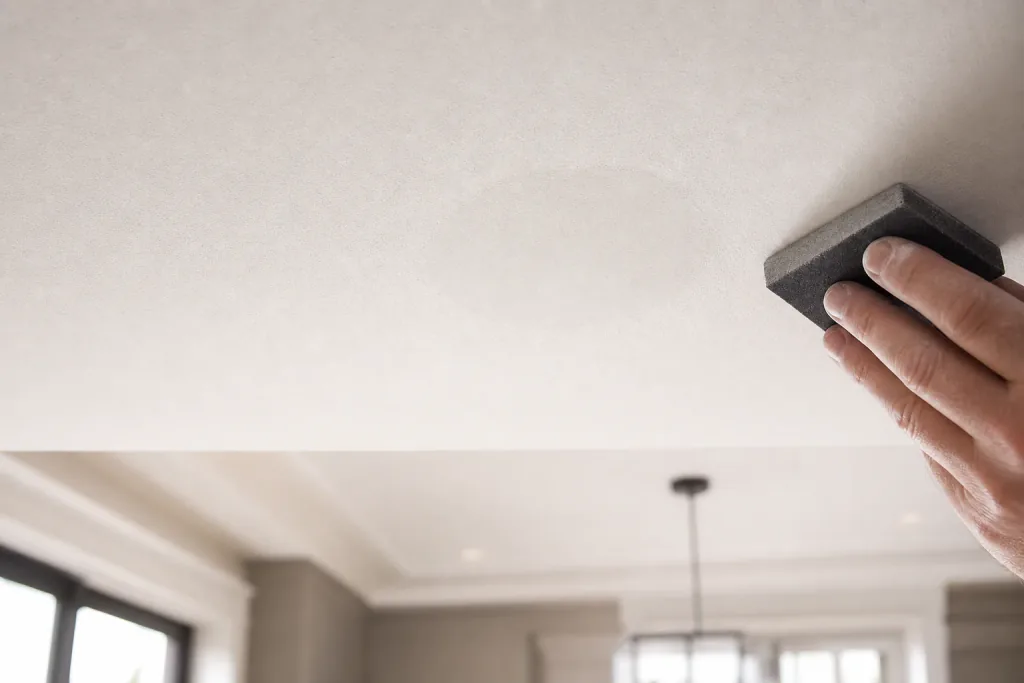
- Sand. 60–80 grit for failed coatings, 80–100 grit for general smoothing. We hit the railings and balusters by hand. Vacuum and tack-cloth everything before stain.
- Apply stain. Typically two coats of an oil-based penetrating semi-transparent. Wet-into-wet on the second coat. We back-brush after spraying or rolling to work the product into the grain and avoid lap marks.
- Final touch-ups. End-grain gets a third pass — that's where rot starts. Vertical surfaces (railings, fascia) get an extra coat. Cleanup, dispose of oily rags safely (they're a real fire hazard), and walk the job with the client.
The whole process takes 2–4 days on a typical residential deck, depending on weather and drying windows.
Cost to Restain a Deck in the GTA (2026)
Real numbers from real jobs we've done this year:
- Small deck (200–300 sq ft, no railings): $800–$1,800 depending on prep level.
- Standard deck with railings (300–400 sq ft): $1,500–$3,000.
- Larger deck (400–600 sq ft with railings, stairs, lattice): $2,000–$4,500.
- Restoration job (heavy sanding, stripping previous failed coat): Add 30–50% to the numbers above. Sometimes more if we're stripping a stubborn film-forming product.
Per-square-foot pricing for stain in the GTA generally runs $3–$7/sq ft for maintenance recoats and $6–$12/sq ft for full restoration. Railings, balusters, and stairs cost more per square foot than open deck — they're all surface area, all detail work. If you're also tackling interior stair staining at the same time, ask about a combined quote.
Fences, Pergolas & Outdoor Wood — Same Rules?
Mostly yes, with a few tweaks:
- Fences are vertical, which means less UV exposure and less standing water. A semi-transparent stain on a fence often lasts 4–5 years instead of 2–3. The flip side: fences have way more linear footage, so the project scope grows fast.
- Pergolas live the easy life — vertical posts, overhead beams with no foot traffic. Treat them like fences for scheduling but use the same premium product as your deck for visual consistency.
- Cedar shingles, fascia, soffits: These are part of your exterior painting system, not your deck system. Different products, different schedules.
If your deck and fence were stained at the same time five years ago, they're probably on different timelines now. The deck needs you sooner.
Want a straight answer on where your deck stands? Send us a couple of photos and we'll tell you what we'd do. Get in touch for a free assessment, take a look at our recent deck and fence projects, or browse our FAQ for more on prep, timing, and product choice. The right call now saves you a full restoration in three years.